
The Social Effects of Alcohol: How Drinking Impacts Relationships, Work, and Life
Alcohol impacts more than just health, it can damage relationships, careers, and communities. Learn the social effects of alcohol and when to seek help.
Clinically reviewed by Tia Conard, LCSW-S — Vice President of Clinical Services, Alsos Behavioral Health
Alcohol is not only a health issue. It is also a social issue. The way someone drinks can affect how they communicate, connect with others, show up at work, manage responsibilities, and participate in family or community life.
For some people, alcohol remains occasional and low-risk. For others, social drinking can shift into problematic drinking, alcohol dependency, or alcohol use disorder. Alcohol use disorder is a medical condition marked by difficulty stopping or controlling alcohol use despite social, occupational, or health consequences.
This article is not meant to diagnose anyone. It can, however, help individuals and families recognize social patterns that may be worth discussing with a professional. Below, we’ll explore the social effects of alcohol, including how alcohol affects relationships, work performance, social behavior, families, and communities.
Table Of Contents
How alcohol affects personal relationships
Alcohol can change the way people communicate, respond to conflict, and maintain emotional closeness. When drinking becomes frequent or excessive, relationships often feel the impact before the person drinking recognizes the problem.
Conflict and emotional regulation
Alcohol can lower inhibitions and make it harder to regulate emotions. This can increase the likelihood of arguments, impulsive comments, verbal aggression, and unsafe behavior. In families or partnerships where conflict already exists, alcohol may intensify tension and make it harder to repair trust. This does not mean alcohol is the only cause of conflict or violence. But research reviews describe alcohol use by one or both partners as a contributing risk factor for the risk and severity of intimate partner violence.1
Trust, communication, and intimacy
Alcohol and relationships can become strained when drinking starts to interfere with honesty, reliability, or emotional presence. A partner may feel ignored, misled, or unsafe. Family members may begin monitoring drinking, avoiding difficult conversations, or walking on eggshells to prevent conflict.
Over time, excessive drinking can erode:
-
Trust
-
Emotional intimacy
-
Communication
-
Shared responsibilities
-
Consistency within the household
-
Confidence that the person will follow through
A loved one may still care deeply about their family while struggling to change their drinking patterns. That is one reason compassionate support and professional care can matter.
Isolation from family and friends
As alcohol use progresses, people may withdraw from relationships that do not revolve around drinking. They may avoid sober friends, miss family events, cancel plans, or spend more time with people who normalize heavy drinking.
Isolation can also happen because of shame. Someone may know their drinking is causing problems but feel embarrassed, defensive, or afraid of being judged. Family members may also isolate themselves because they do not know how to explain what is happening at home.
For loved ones unsure what to say or do, Sheridan Grove Recovery has a related guide on how to help an alcoholic.
Family impact and children
SAMHSA reports that children living with a parent with substance use disorder are more likely to have mental and behavioral disorders, difficulties in academic, social, and family functioning, and an increased risk of developing SUD symptoms themselves. It also states that about 7.5 million children lived with at least one parent with alcohol use disorder based on 2009–2014 NSDUH data.2
Children may not understand alcohol dependency, but they often notice changes in mood, conflict, absence, broken promises, or instability. Supporting the whole family can be an important part of recovery.
Call Sheridan Grove Recovery to speak about treatment options today.
Alcohol dependency and workplace performance
Alcohol dependency can affect work long before someone loses a job or faces a formal consequence. Sometimes the changes are subtle at first: lower energy, missed deadlines, strained relationships, or difficulty concentrating.
Absenteeism
Alcohol-related illness, hangovers, withdrawal symptoms, or late nights can lead to missed workdays. A person may call out more often, arrive late, leave early, or use sick time to recover from drinking. Over time, absenteeism can affect team trust, job security, and career growth.
Presenteeism
Presenteeism means someone is physically at work but not functioning at their usual level. With alcohol, this may include showing up hungover, exhausted, emotionally distracted, or impaired.
This can lead to:
-
Reduced productivity
-
Poor decision-making
-
Missed details
-
Safety risks
-
Lower quality work
-
Increased conflict with coworkers or supervisors
For professionals in high-responsibility roles, alcohol-related impairment can create serious consequences for clients, patients, coworkers, or the public.
Professional relationships and reputation
Alcohol can also damage professional relationships. Coworkers may feel they cannot rely on someone. Supervisors may notice changes in performance or behavior. Workplace social events involving alcohol can become risky if drinking leads to inappropriate comments, arguments, boundary issues, or unprofessional conduct.
Even when job performance has not fully collapsed, alcohol dependency can quietly affect reputation and career trajectory.
DUI and career consequences
A DUI can have major employment consequences, especially for people in driving-related jobs, licensed professions, healthcare, education, legal roles, public safety, or positions requiring trust and reliability. Depending on the role, consequences may include suspension, job loss, professional discipline, or difficulty finding future employment.
How alcohol affects social behavior
Alcohol is often described as a social lubricant because it can temporarily reduce social anxiety or make people feel more confident. That short-term effect is one reason drinking is common at parties, holidays, weddings, work events, and celebrations.
But with time, alcohol can change social behavior in ways that become difficult to manage.
Short-term changes in social behavior
In the short term, alcohol may make someone feel more talkative, relaxed, bold, or emotionally open. But it can also increase impulsivity, reduce judgment, and make social boundaries harder to maintain.
This can lead to regretted conversations, risky decisions, conflict, unsafe driving, or behavior that does not align with someone’s values.
The dependency spiral
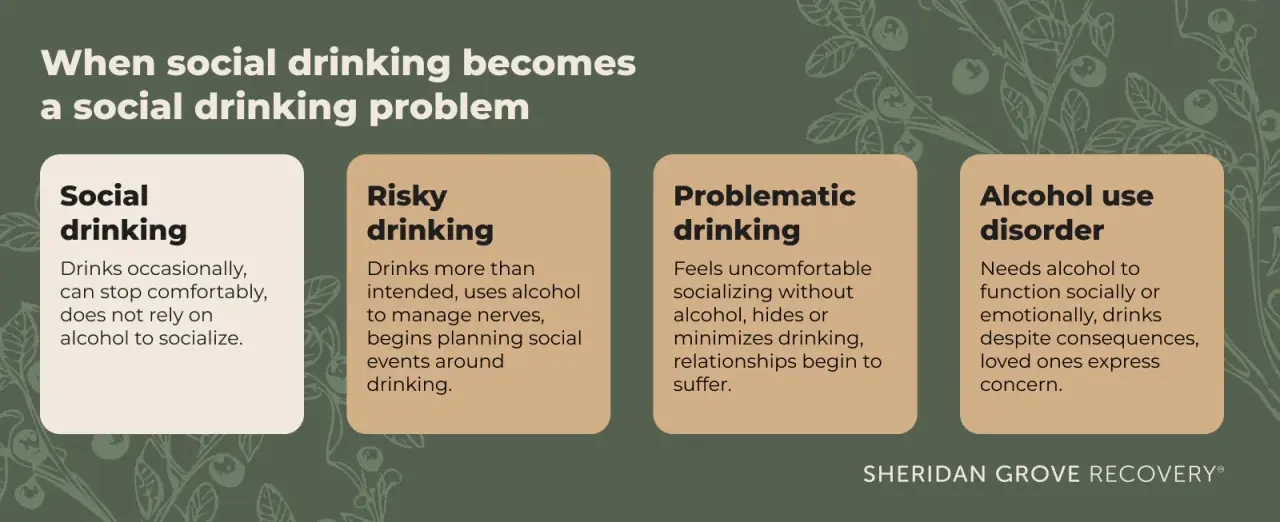
A social drinking problem can develop when someone begins to feel unable to socialize without alcohol. They may believe they need alcohol to relax, flirt, network, speak confidently, or feel comfortable in groups.
What starts as “I drink to loosen up” can become “I cannot do this without drinking.”
Social events become drinking events
For some people, alcohol begins to take over the purpose of social gatherings. Graduations, birthdays, holidays, concerts, sports games, work events, and dinners may become primarily opportunities to drink.
This can create tension with loved ones who want to connect but feel alcohol always becomes the center of the event.
Stigma, shame, and withdrawal
As drinking becomes more problematic, many people withdraw from social life entirely. They may avoid people who ask questions, skip events where alcohol is not available, or isolate because they feel ashamed.
This can create a painful cycle: drinking causes social harm, shame leads to isolation, and isolation increases the urge to drink.
Societal & community effects of alcohol
The effects of alcohol on society extend beyond individual households. Excessive alcohol use can affect workplaces, healthcare systems, public safety, neighborhoods, and community stability.
Economic costs
Excessive drinking has a major economic impact in the United States. The CDC reports that excessive drinking costs the U.S. About $249 billion in 2010, the most recent national estimate, including lost labor, reduced workplace performance, property damage, crashes, criminal justice needs, and healthcare costs.3
These costs are not only financial. They also reflect lost time, family stress, preventable injuries, and reduced quality of life.
Drunk driving and public safety
Alcohol-impaired driving remains one of the clearest community harms linked to alcohol misuse. NHTSA reports that about 32 people in the United States die every day in drunk-driving crashes, and 11,904 people died in alcohol-impaired driving traffic deaths in 2024.4
Alcohol-impaired crashes are preventable, yet they continue to affect families, first responders, healthcare systems, and communities across the country.
Domestic violence and unsafe relationships
Alcohol does not cause every abusive situation, and it should not be used to excuse harm. However, alcohol is a known risk factor that can worsen conflict and increase danger in already unsafe relationships. Research reviews describe alcohol use as an important risk factor for intimate partner violence and suggest that reducing harmful alcohol use may help reduce IPV risk at individual and community levels.3
Anyone in immediate danger should call 911. If drinking is part of what is happening at home, our admissions team can talk through treatment options with you confidentially.
Community health and stability
Communities with high levels of alcohol misuse may experience broader harms, including violence, impaired driving, family instability, and increased demand on emergency services. The CDC notes that excessive alcohol use harms not only the person drinking but also people around them, including loved ones and the wider community.5
Addressing alcohol misuse is not just about individual willpower. It often requires accessible treatment, family support, safer environments, and reduced stigma around asking for help.
When social drinking becomes a problem, get help in Denver, CO
Social drinking may have crossed a line when alcohol starts affecting relationships, work, family responsibilities, safety, or emotional well-being.
Signs it may be time to seek help include:
-
Needing alcohol to feel comfortable socially
-
Drinking alone or hiding alcohol use
-
Drinking more than intended
-
Family members, friends, or coworkers expressing concern
-
Avoiding people who question drinking
-
Missing work, school, or responsibilities because of alcohol
-
Continuing to drink after arguments, consequences, or health concerns
-
Feeling unable to cut back or stop
Alcohol use disorder is a medical condition, not a character flaw. NIAAA describes AUD as a condition involving difficulty stopping or controlling alcohol use despite negative social, occupational, or health consequences.6
Sheridan Grove Recovery provides alcohol addiction treatment near Denver and Aurora, Colorado, with support for people and families who are ready to talk about what is happening. Accessible help is available, including Medicaid acceptance and 24/7 admissions support.
If alcohol is affecting your relationships, work, or family life, reaching out for a conversation can be the first step toward clarity. Contact Sheridan Grove Recovery to speak with someone about treatment options near Denver, CO.
Frequently asked questions.
How does alcohol affect relationships?
Alcohol can affect relationships by increasing conflict, reducing trust, weakening communication, and creating emotional distance. Excessive drinking may also lead someone to withdraw from sober friends or neglect family responsibilities.
When does social drinking become a problem?
Social drinking may become a problem when someone feels they need alcohol to socialize, drinks more than intended, hides drinking, experiences relationship or work consequences, or continues drinking despite concern from loved ones.
How can I help an alcoholic loved one?
You can help by approaching the person calmly, avoiding blame, setting healthy boundaries, learning about alcohol use disorder, and encouraging professional support. Sheridan Grove Recovery’s guide on how to help an alcoholic offers more guidance.
Where can I get alcohol addiction treatment near Denver?
Sheridan Grove Recovery offers alcohol addiction treatment near Denver and Aurora, Colorado. If alcohol is affecting your life or someone you love, contact Sheridan Grove Recovery to speak with admissions support.
Ready when you are.
Admissions answers 24/7. Coverage check happens on the call.